
Backroads and Ballplayers #164
Stories of the famous and not-so-famous men and women from a time when baseball was “Arkansas’ Game.” Backroads and Ballplayers Weekly is always free and short enough to finish in one cup of coffee.

Hit by Pitch Day, “Sherm,” Mystery Photo Revealed, and Closing Thoughts About Ohtani in the News.
_________________________
If you do not want to miss these posts, you can subscribe or save the address of the Backroads and Ballplayers Facebook Page. Instructions below:
A Subscription sends these weekly posts to your mailbox. There is no charge for the subscription or the Backroads and Ballplayers Weekly.
If you don’t want to subscribe, you can find the weekly posts on Monday evenings at Backroads and Ballplayers on Facebook. SAVE THE LINK
___________________________
Hit By Pitch Day - Celebrated August 4, Every Year?
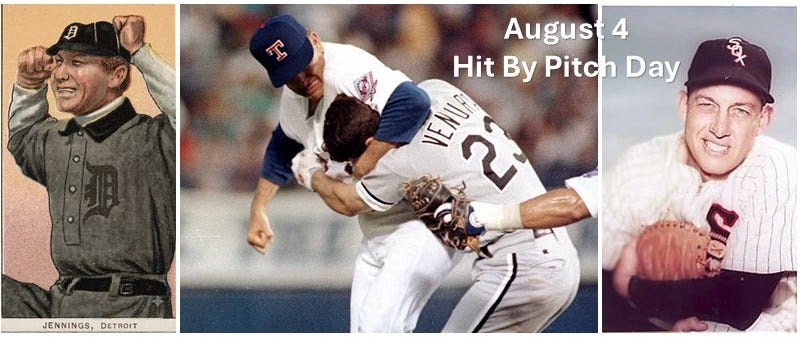
You have to do a tedious search to find the lifetime record for hit by pitch in a major league career. Hughie Jennings (1891- 1918) holds the record. Ole Hughie was hit 287 times. His “best” year was 1896, when the mouthy little infielder was bonked 51 times.
Pitchers were not especially fond of Jennings. He was annoyingly chatty, crowded the plate, and besides, in those days, it didn’t hurt as badly to get hit by a 75-mile-per-hour fastball. The .312 lifetime hitter was also an astute manager and a part-time attorney. Jennings was voted into the Hall of Fame in 1945, but due to World War II travel restrictions, he was not inducted until 2013.
This week, we recognize one of the most important days of the baseball season. Tuesday, August 4, is National Hit By Pitch Day! Because of Jennings’ “accomplishments” and the excitement a good beaning brings to the game, we pause this time of year to celebrate getting a “free pass by pain,” and its contribution to our game.
According to some detractors, baseball moves too slowly. Those of us who defend the process like to say baseball allows for time to think. There are, however, moments of thoughtless reaction. One of the most discussed of those “reactions” occurred on August 4, 1993, in Arlington, Texas.
Twenty-six-year-old Robin Ventura took offense to a fastball up and in, very up and very in. He had several choices in that moment. Perhaps he felt he did not have enough time for the scientific method, but some observation, hypothesis, experimentation, and analysis might have led to a better choice of options.
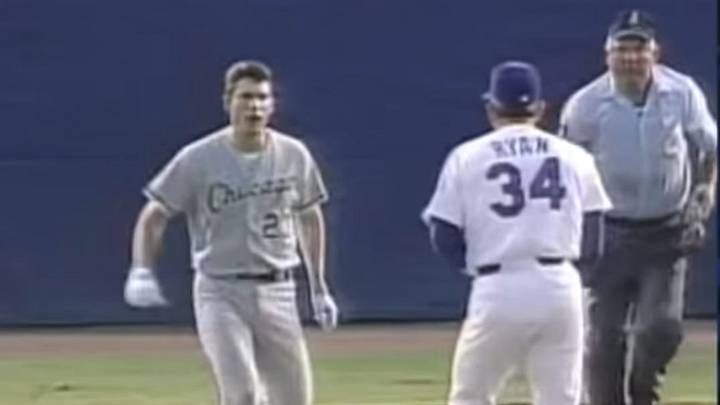
Cursing and waving his fist might have been a plan. Grinning and pointing at the pitcher who was old enough to be his father, or just going quietly to first base, might have been logical choices. There were many possible outcomes that would have worked out better for the 26-year-old infielder. Ventura probably chose the worst reaction, both for the short term and for his lasting reputation.
After an unfortunately brief planning period, Ventura charged a legendary cowboy from the Texas ranch country. Nolan Ryan had been bulldogging steers since his childhood, and a 180-pound third baseman was no big deal. The old vet offered a hug on Ventura’s arrival and then proceeded to pound him in the face until catcher Pudge Rodriguez strolled out to break up the prolonged noogie. Ventura was ejected and suspended for two games. Ryan stayed in the game and was the winning pitcher in a 5-3 Rangers victory.
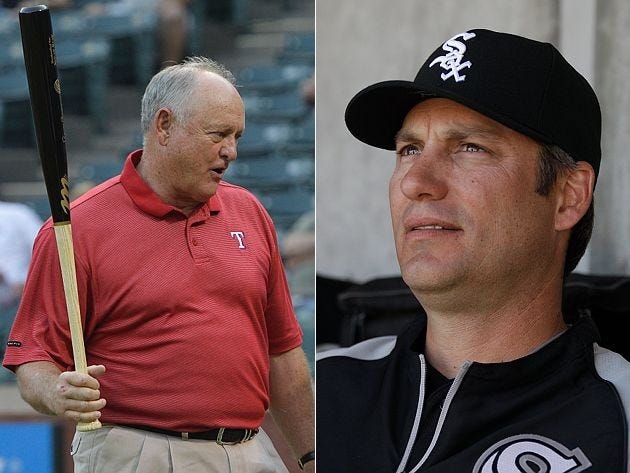
Bud Selig, the chair of MLB’s Executive Committee, was more or less in charge after the semi-forced resignation of Commissioner Fay Vincent. Selig immediately declared that, in the future, August 4 would be Hit By Pitch Day and celebrated throughout the league:
“All pitchers would wear number 34 and all position players would wear number 23. In the third inning of every game throughout the MLB, the pitcher would throw at the head of a chosen hitter, and the Ryan/Ventura reenactment would take place on the mound.”
Actually, there is no such thing as “Hit By Pitch Day,” but if MLB thought it would raise a few million, there probably would be such a celebration.
By the way, a fellow from the old days named Gus “Rubber Arm” Weyhing holds the career record for hit batters by a pitcher, but that was in a day when Ole Gus didn’t wear a glove, and batters didn’t wear a helmet. A more “important” number would be the 190 batters hit by Randy Johnson. Those guys earned their “free pass.”
________________________
The Lost Story of Arkansas “Most Hit” Man
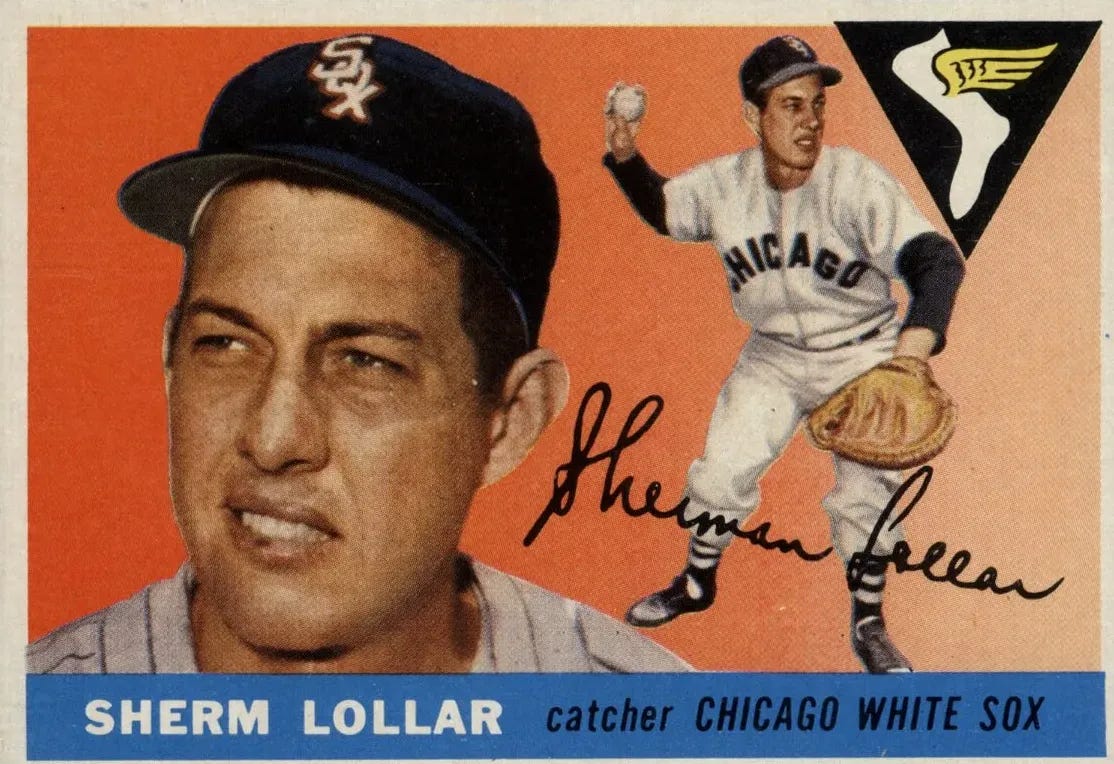
John Sherman Lollar holds the “hit” record for Arkansans. That might be a misleading statement. Lollar’s is not usually celebrated on a short list of Major League Baseball stars born in Arkansas, but he was a nine-time All-Star. In a career that spanned 18 seasons, 1752 games, and included a World Series ring, Sherm Lollar received 115 free passes as a “hit batsman.” He is the only Arkansas-born Major Leaguer with more than 100 career HBP.
Respected baseball historian and habitual list maker Bill James ranked Sherman Lollar as number 31 among catchers in baseball history before 2001. Although James keeps hacking away at the list, inserting guys like Buster Posey, Joe Mauer, and Ted Simmons above Lollar, the guru of objectivity is fond of Lollar. Sherm led his league in fielding percentage five times and in double plays three times.
Perhaps an evaluator like James, who lets the numbers do the talking, realized Sherman Lollar needed someone to speak for him. Lollar talked very little about himself and played in a day when sportswriters spent their words on the likes of Yogi Berra. One of them was called “Yogi,” said funny things, and played in the World Series regularly, while the other was known simply as “Sherm,” a quiet, reserved rural Arkansas guy, who never would have appeared on the Ed Sullivan show.
John Sherman Lollar Jr. was born in Durham, Arkansas, in 1924. In those days, Durham was best known as an emergency gas and bathroom stop on Arkansas Highway 16, about 20 miles east of the University of Arkansas. Lollar moved to Fayetteville when he was three years old, and the college town would be the hometown of his youth. His father died when Sherman was eight, leaving the oldest of four Lollar children the added responsibility of family caretaker.
In a time when high school baseball programs were rare, Fayetteville High School did not have a baseball team. Young Sherman found the game where he could, playing American Legion baseball and catching for local men’s teams by his mid-teens. After high school graduation, Lollar took a job at a JCPenney store in Pittsburgh, Kansas, to be near a Ban Johnson semi-pro league. When the league folded, he caught on with a semi-pro team in Baxter Springs as a player-manager. The Baltimore Orioles found him there in 1943, and at age 18, Sherman Lollar became a professional baseball player, making $20 a month. He would be a baseball man for the rest of his life.
Lollar spent his first three pro seasons with the International League Orioles. In the diluted player pool of World War II baseball, Lollar became one of the minor leagues’ outstanding prospects. Always known for his defense, he led the International League in hitting in 1945.
The “regular” major leaguers returned in 1946, and suddenly promotions to big league clubs were contingent on the performance of players who reclaimed their jobs. Cleveland technically had the rights to Lollar since Baltimore was a farm club in their organization. The Indians had planned for Jim Hegan to be their catcher before he was lost to the Coast Guard during the war years. The Tribe opened the season with Hegan, Lollar, and veteran Frankie Hayes sharing the 1946 catching duties. Hegan finally won the job about mid-season, Hayes became the backup, and Lollar was optioned back to Baltimore.
In December of 1946, the Indians remedied their crowded catching situation by trading Lollar to the Yankees for a war hero named Gene Bearden. According to the press, Bearden, from Helena, Arkansas, had miraculously recovered from some false life-threatening injuries sustained in the Navy, to become an effective pitcher in the Pacific Coast League. In the short term, the Yanks got a promising catcher to back up Yogi Berra. The Indians got a pitcher who would become a World Series hero in 1948.
In 1947, Yogi did not need a backup, but in a strange move by New York manager Bucky Harris, Lollar, who had played only 11 regular-season games, started Game Three and Game Six of the 1947 World Series. The Yanks beat the Dodgers in seven games. Lollar, who had three hits in four at-bats, earned his only World Series ring.
Lollar was traded again in the winter of 1948, after being used in only 22 games by the catcher-loaded Yanks. An off-season trade to the hapless St. Louis Browns would land Lollar on a roster where he would be the everyday catcher. Given the opportunity to prove himself, Lollar became one of the American League’s most respected defensive catchers and an All-Star selection in 1950. As had been the case with his previous major league stops, Lollar was traded again in the 1951 offseason. This time, he found a home with the Chicago White Sox.
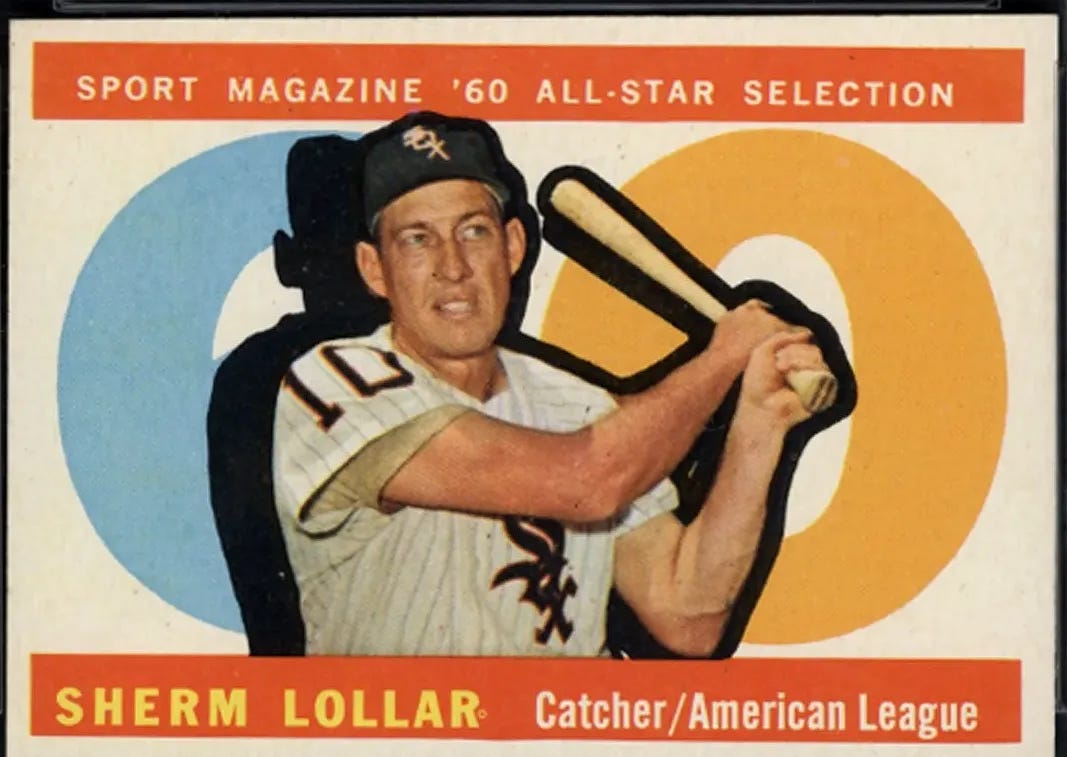
Over the next 12 years, Sherman Lollar would log 1358 games for the White Sox, play in eight All-Star games, and bat a respectable .265, but it was his defense that earned him the most recognition. Four times, as a White Sox catcher, he led the league in fielding percentage, finishing in the top ten in five other seasons. He was among the league leaders in baserunners caught stealing seven times and first in double plays by a catcher three times. He won three Gold Gloves and placed in the top ten in the MVP balloting in 1958 and 1959.
Lollar also excelled at an assignment known in baseball as “handling a pitching staff.” His 1958 Topps baseball card highlighted this component of his game. “Sherm’s great strength lies in his ability to handle pitchers. His experience with the hitter’s weaknesses is invaluable to members of the Sox staff.”
The best of Lollar’s years in Chicago was also the best year for the White Sox since the 1917 team led by Shoeless Joe Jackson and managed by a colorful fellow called “Pants” Rowland. That pre-Black Sox team dominated the American League and won the World Series over the New York Giants in six games.
The 1959 pennant-winners were called the Go-Go Sox, a different kind of team built on a philosophy of speed, defense, and pitching. MVP Nellie Fox batted .306 and drove in 70 runs on just two home runs. Shortstop Luis Aparicio stole 56 bases, and 39-year-old Early Wynn won 22 games.
Although he was not part of the speed component of the surprise pennant winners, Lollar had a career year. In a time before some advanced metrics would have raised the value of his contribution, Lollar finished ninth in the MVP vote, behind teammates Fox, Aparicio, Wynn, and Jim Landis. He led the Sox in RBIs, home runs, OPS, Slugging %, and extra-base hits.
The White Sox fell to the Los Angeles Dodgers four games to two in the 1959 World Series. Lollar had a home run and five RBIs in the series dominated by Dodgers’ relief pitcher Larry Sherry.
Sherm Lollar played with the White Sox until his retirement in 1963. He was inducted into the Arkansas Sports Hall of Fame in 1973.
When I was hanging around eternally unchanging ballparks with Dad and other grown men who made a living playing a boy’s game, I somehow assumed that time was merciful and indulgent, that nobody got old, that nobody died, that ballplayers would always take batting practice, and their kids would always shag flies. But even ballplayers get old, and even ballplayers die — my dad died in 1977. –Kevin Lollar 2015
__________________________
Mystery Photo, July 2026 - Lee Tate
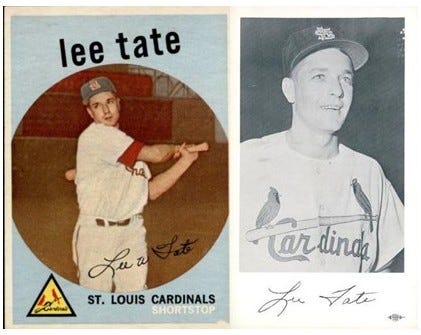
After a number of hints that were not effective, several readers named St. Louis Cardinals’ backup infielder Lee Tate as the July 2026 Mystery Photo. Four subscribers with time on their hands named Tate on Monday, July 27: Ronny Clay, Rodney Todd, Keith Fudge, and Johnny Wilson.
________________________
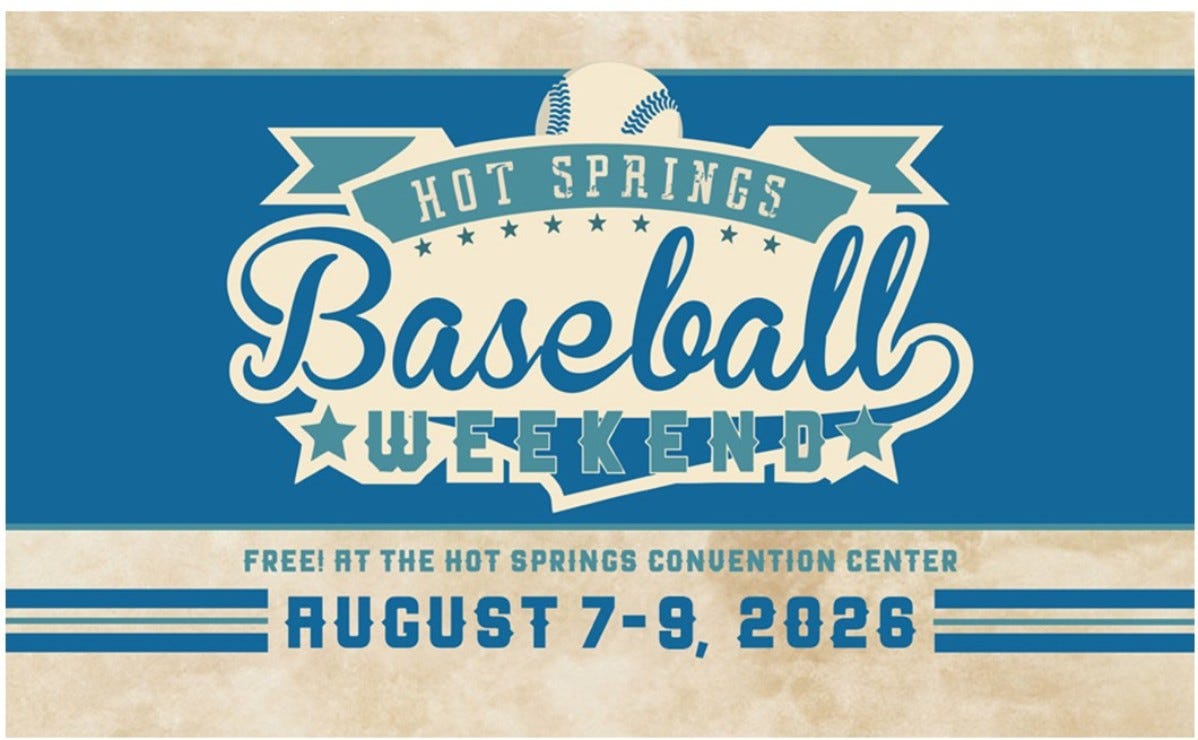
I hope to see you Saturday at Hot Springs Baseball Weekend!
__________________________
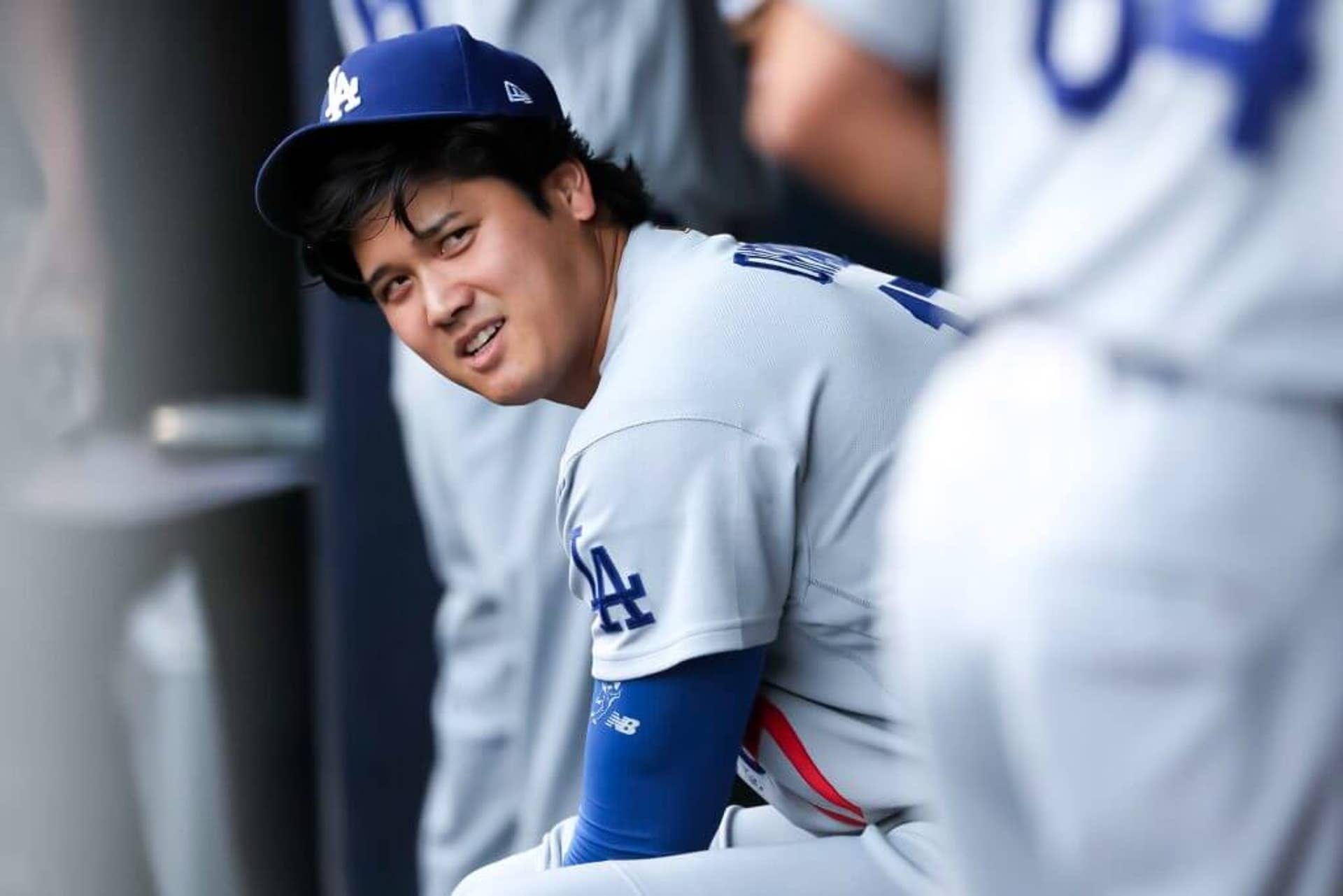
In the News - Shohei Ohtani
“I felt a great disturbance in the Force, as if millions of voices suddenly cried out in terror and were suddenly silenced.” —Obi-Wan Kenobi, Star Wars: Episode IV (1977)
“You will want to stay tuned for the Los Angeles Dodgers vs. the San Francisco Giants and see the greatest player ever to wear a baseball uniform.” —ESPN, Sunday Night Baseball, September 24, 2023
Shohei Ohtani will keep on doing impossible things because he’s the most impossible baseball player who has ever lived. —Joe Posnanski (2025)
Shohei Ohtani’s latest injuries could have ramifications on the trade deadline – and beyond… —Ken Rosenthal July 29, 2026
________________________
Jennings had incredible stats as a SS for Baltimore. He injured his arm in 1898 I believe and was never the same player after. At one point after he went to Cornell law school and dove into a pool with no water and fractured his skull. He lived an interesting life.
I enjoyed this especially the way you blended baseball history with memorable stories from the game's past. Sherm Lollar's section was a great reminder that some outstanding players don't always get the recognition they deserve. Which overlooked baseball figure do you think deserves a feature next?