
Backroads and Ballplayers #162
Stories of the famous and not-so-famous men and women from a time when baseball was “Arkansas’ Game.” Backroads and Ballplayers Weekly is always free and short enough to finish in one cup of coffee.

___________________
On the Road:
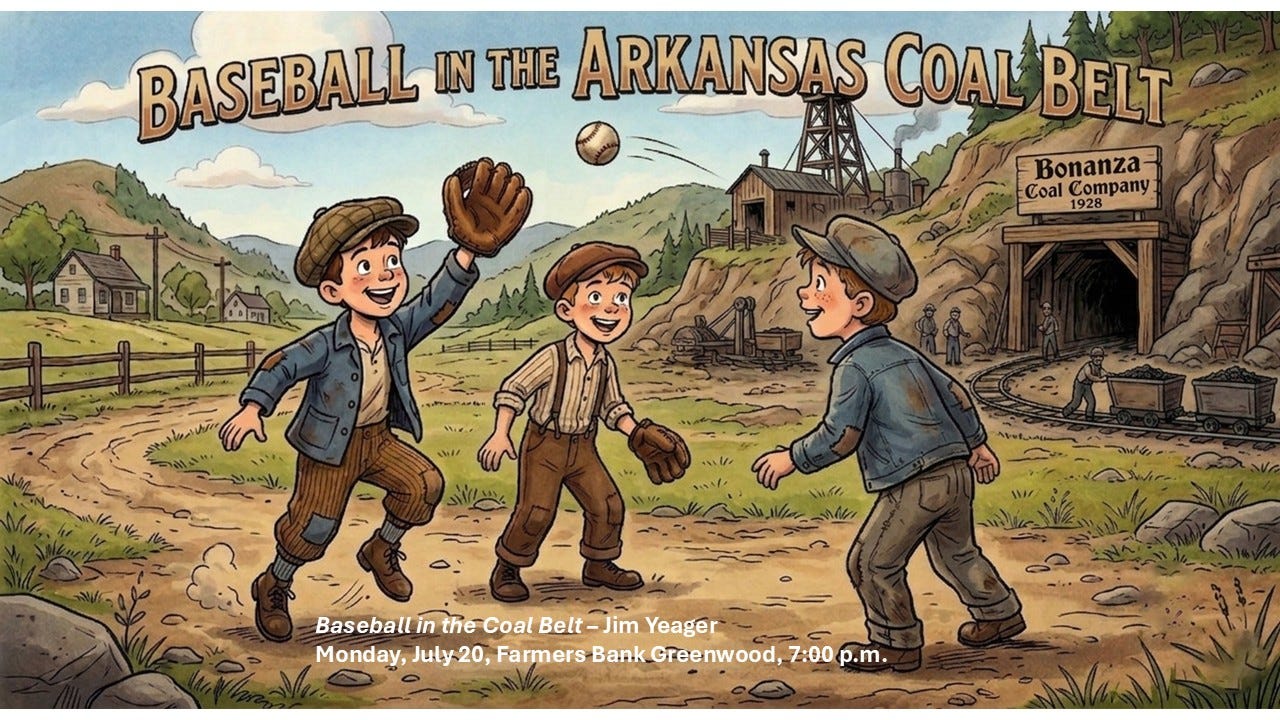
I would love to see you tonight at 7:00 p.m. in Greenwood, Arkansas. The South Sebastian County Historical Society is always one of my favorite opportunities to share some of the lost stories of Arkansas baseball history. Guests are always welcome. The meeting room is on the right side of Farmers Bank.
________________________________
Kopps, Smith, and Tommy John, Mystery Photo Revisited, Dustin Moseley, Madison McEntire,
Thanks for your support. Backroads and Ballplayer Weekly is an example of OUR shared work to save the lost history of Arkansas baseball.
If you do not want to miss these posts, you can subscribe or save the address of the Backroads and Ballplayers Facebook Page. Instructions below:
A Subscription sends these weekly posts to your mailbox. There is no charge for the subscription or the Backroads and Ballplayers Weekly.
If you don’t want to subscribe, you can find the weekly posts on Monday evenings at Backroads and Ballplayers on Facebook. SAVE THE LINK
_________________________
July Mystery Photo Revisited:
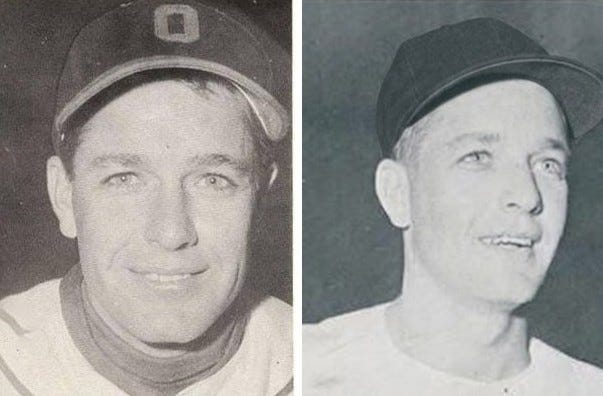
More hints: Our mystery photo seems to be harder than I expected. He played more than 1700 professional games, and he is one of the top 20 oldest living major leaguers. His hometown has one of those descriptive Arkansas names.
In his last year in the big leagues, one of his more famous teammates was in the first season of a Hall of Fame career. Do you have a guess?
_________________________
Kopps, Smith, and Tommy John
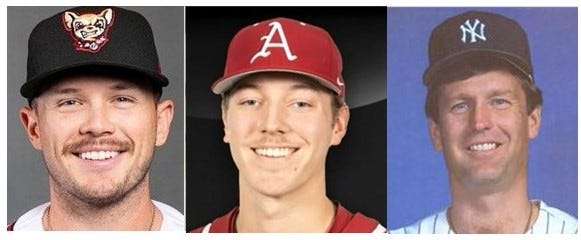
In the last few weeks, I have written about Kevin Kopps’ release and Hagen Smith’s slow progress. Kopps is still clinging to his dream in the Mexican League and pitching very well. Smith is in AAA, struggling with his control. Knowing the competitive spirit of both young men, I still think they may become major league pitchers. Both were the best pitchers in college baseball while pitching for the Razorbacks, and both recovered from what was once a career-ending diagnosis.
Almost every week or maybe more often:
Somewhere, a teenager who thought he was headed for the big leagues felt something in his elbow. Although he had never felt that exact symptom, he teared up and walked with his coach and his father back to the locker room.
As the young pitcher composed himself, he tried to have positive thoughts. He could go to college and become a baseball coach; that would be a pretty-good life. He could marry his high school sweetheart and move to some small town. He would be a good coach; he knew some excellent ones. Despite the real possibility that his childhood dream would never become a reality, there was another choice.
Dr. Frank Jobe was born July 16, 1925. He served as a combat medic in World War II. Instead of enjoying the Christmas Holidays in 1944, Jobe was parachuting into Bastogne during the Battle of the Bulge. In the unique circumstances of war, he was forced to think outside the box, and he learned to give hope to seriously injured young men.
By the 1970s, Jobe was the team physician for the Los Angeles Dodgers. Pitchers kept coming to him with the same injury: a torn ligament in the elbow, the kind that ended careers. There was no fix. No surgery existed for it. A torn ulnar collateral ligament was a death sentence for a throwing arm.
Jobe had an idea that nobody had tried before. He proposed using a tendon from another part of the patient's own body and grafting it into the elbow. Although Jobe gave Tommy John a 1 in 100 chance that he would ever pitch again, John said yes anyway.
The surgery took place in September 1974. Jobe threaded the borrowed tendon through drilled holes in the bone. He had never done this exact procedure before, nor had anyone else.
Tommy John did not pitch again until 1976. When he returned, his arm held up for another 14 seasons. He won 164 games after the surgery, more than he had won before it.
Frank Jobe was later honored by the Baseball Hall of Fame with the Buck O'Neil Lifetime Achievement Award in 2013. He died in 2014, having watched his procedure save the careers of thousands of pitchers, from Little League fields to the Major Leagues.
Smith had “Tommy John surgery when he was 16 years old. Kopps was a Razorback in 2017 when he had his procedure. Both were honored as college baseball’s best pitchers.
What about the surgery’s namesake? His name is as common in today’s game as Mantle, Mays, and Aaron, but his selection for baseball’s Hall of Fame is still on hold.
Some say John was very good, and the Hall of Fame is for those who were better than “pretty good.” Tommy John won 288 games in his 26-year career. Only one pitcher with more wins (Roger Clemens) is not in the Hall of Fame. John pitched in 760 games and threw over 4,700 innings. He had four top-10 Cy Young Award finishes, including two runner-up spots.
Yes, Tommy John was very good for a long period of time. That fact in itself is the part of his credentials that voters use to eliminate him from their ballots. There is obviously a separate and unique set of standards for players who were exceptional for a short period of time (Koufax, Dizzy Dean), but having a long and consistently excellent career is often used to disqualify a player with credentials like Tommy John’s. What do you think?
So you are a general manager with money to spend. Do you want Dean or Koufax? They will probably win you a couple of World Series, OR do you want a pretty good starter who will be in your rotation for 20+ years?
_________________________
This just in…Please Share
Over the last few years, Madison McEntire, president of the Robinson-Kell Chapter of SABR, has become a regular contributor to the SABR Bio Project and the SABR Games Project, two of the most popular publicly available resources created by the SABR membership. His latest submission went live last week.
On August 20, 2016, the guest speaker at the summer meeting of the Robinson-Kell Chapter was first-round draft choice Dustin Moseley. Moseley was one of our chapter’s most interesting speakers. He was candid, humorous, and insightful. Moseley talked openly about the ups and downs of a baseball career and his continued dedication to the game. McEntire’s BioProject contribution about the life and career of Arkansas’ Texarkana High School star can be found at the link below. Congratulations, Madison McEntire!
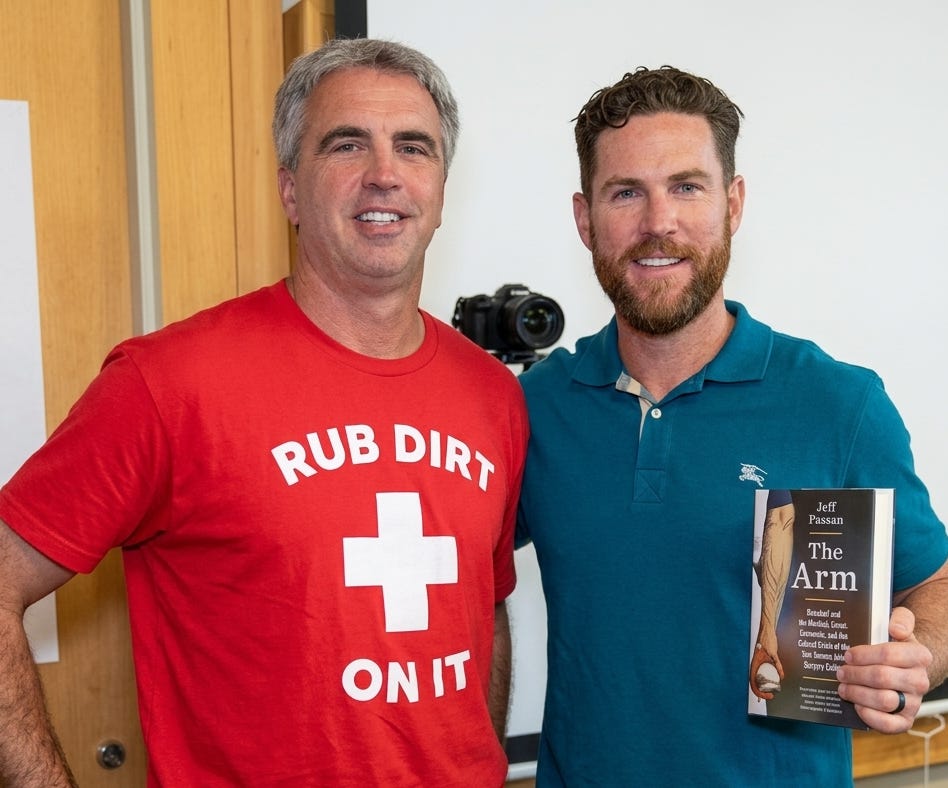
Link to the Dustin Moseley Biography in the SABR BioProject.
Madison McEntire is a structural engineer and lives in Bryant, Arkansas. He is from the small town of Marshall, Arkansas, and he fell in love with baseball at a young age. While growing up, McEntire enjoyed reading about the game’s history and great players, and he was excited when his home got cable TV in 1983. The “super stations” allowed him to watch the Cubs and Braves every day. McEntire joined SABR in 1992 shortly after graduating from the University of Arkansas. In 2004, he helped form the Robinson-Kell SABR chapter. McEntire loves baseball trivia and following college baseball, especially the Arkansas Razorbacks.
_________________________