
Backroads and Ballplayers #158
Stories of the famous and not-so-famous men and women from a time when baseball was “Arkansas’ Game.” Backroads and Ballplayers Weekly is always free and short enough to finish in one cup of coffee.

Current Subscribers: 324
If you do not want to miss these posts, you can subscribe or save the address of the Backroads and Ballplayers Facebook Page. Instructions below:
A Subscription sends these weekly posts to your mailbox. There is no charge for the subscription or the Backroads and Ballplayers Weekly.
If you don’t want to subscribe, you can find the weekly posts on Monday evenings at Backroads and Ballplayers on Facebook. SAVE THE LINK
_______________________
College World Series, Kevin Kopps, and the Lost Story of the Other Dizzy Dean (Career Minor Leaguer)
Is it Boomer or Bummer?
As I publish this week’s Backroads and Ballplayers Weekly, the last NCAA national championship is down to North Carolina and the SEC team that tied for 11th in the regular-season SEC standings. I am not sure how I feel about that. I do know that I am a failure at predicting the winner of the College World Series.
I also know that an 18-year-old freshman is better than any pitcher I have seen this year, including the 24-year-olds with high expectations. Will we see him again tonight?
My friends and subscribers seem to fall into two camps:
Any team other than one of our SEC rivals can win the College World Series, and I am okay with that.
OR
If an SEC team wins the College World Series, that proves the credibility of the Southeastern Conference. I am okay with that.
AND…
Is it a good thing to fight through a tough conference schedule and an excruciating postseason tournament? Does winning either of those improve a team that ends up in Omaha, or is there a letdown that has a negative effect?
Do you have an opinion about our rivals from the SEC or the value of winning the regular season title, and/or the SEC postseason tournament?
___________________
Speaking of the outstanding pitcher in college baseball, I have had this note card on my desk since March. Although we all suspected it was coming, this announcement made me sad.
The San Diego Padres officially released Kevin Kopps on March 17. He had been in the Padres’ minor league system for five years. Like many of you, he will always remain one of my all-time favorite Razorbacks.
Unlike many released players his age, Kopps did not give up. He immediately signed with Campeche in the Mexican League. Campeche is a tourist town on the Gulf of MEXICO, and the last chance for several ex-major leaguers and one Golden Spikes Award Winner.
Nothing can change the fact that he was once the best pitcher in college baseball. He appeared in about 80 games in AAA, but he struggled to replicate his historic college dominance in the upper minor leagues. Several times, I thought he might get a shot with the Padres, but it never happened.
He can probably play in the Mexican League next season, but getting another shot with a big-league club is a long shot. I have a file called “coming close.” For now, Kopps’ story is part of that group of players with Arkansas connections who came just short of making it to the “Show.’
Coming Close!
Lost Story: Dizzy Dean was “On His Way” in 1958. No, Not That Dizzy Dean.
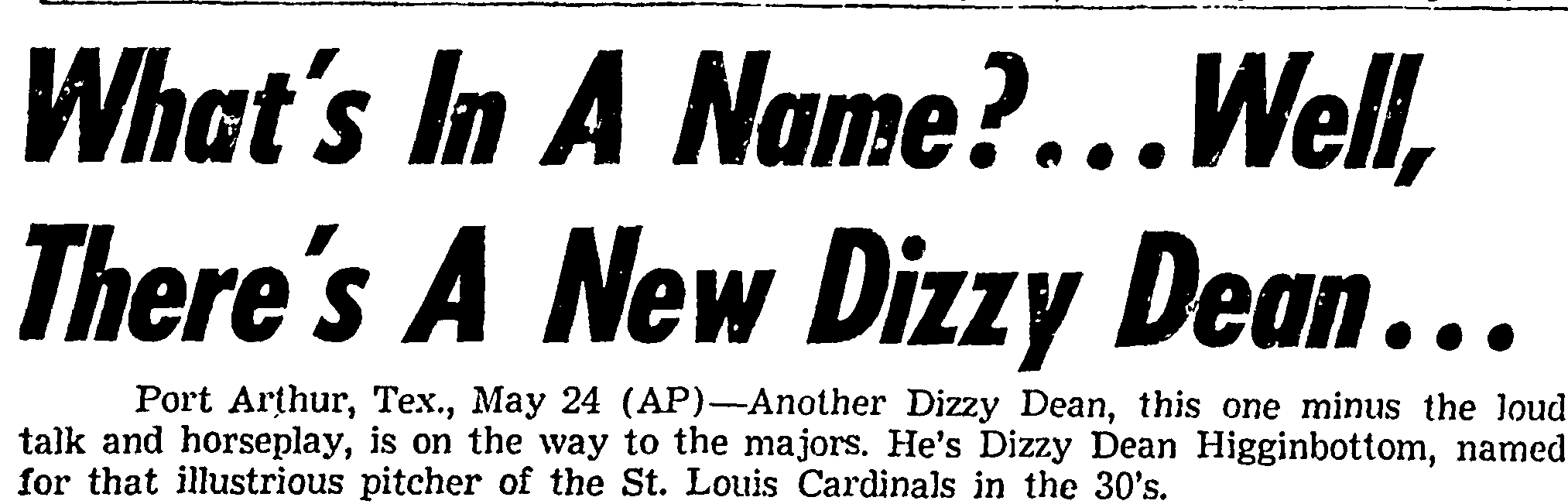
On May 25, 1958, an Associated Press headline was featured prominently on sports pages throughout the country. The headline, “There’s A New Dizzy Dean,” headed for the majors, was an immediate attention-getter for baseball fans.
Tucked away below the headline was the story of a promising left-hander who was the sensation of the Big State League, pitching for the Port Arthur/Temple Redlegs the previous season. Like Diz, the young prodigy was from the mountains of Arkansas, but this version of Dizzy lacked the boasting and exuberant personality of the original Diz. The future star introduced in the story was Dizzy Dean Higginbottom from Poughkeepsie, Arkansas.
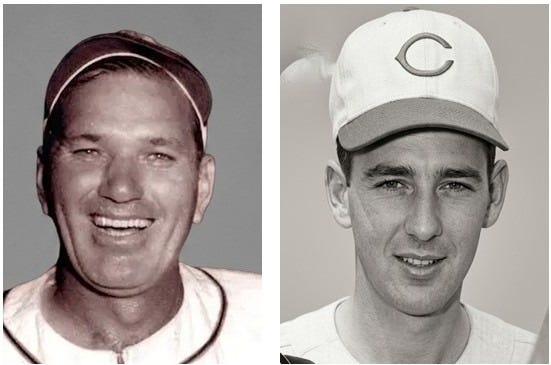
Dizzy Higginbottom was obviously named for the great Cardinal Hall of Famer, Dizzy Dean. Higginbottom’s father, Roe, was the typical rural Arkansas Cardinal fan. When his son arrived a year after the Gas House Gang’s World Series triumph, the chosen name reflected both his admiration for the original Dizzy and the baseball aspirations he held for his new son.
Young Higginbottom, a lefty blessed with good size and natural ability, quickly lived up to his father’s dreams. When Dizzy was a teenager, the family moved from Northeast Arkansas to Anderson, Indiana, where young Diz starred on local summer league teams. On May 1st, 1954, the Cincinnati Reds signed the 18-year-old after a tryout camp in Indiana and sent him to Fitzgerald, Georgia.
Higginbottom split the summer between Cincinnati farm clubs in Fitzgerald and Fort Walton Beach, Florida, and posted a 1-4 record for the two clubs. Although his first minor league season was unremarkable, Dizzy Higginbottom would not be 19 years old until the fall.
In 1955, he began to emerge as one of the Reds’ top prospects. Returning to Class D Fort Walton Beach, Higginbottom officially posted a 13-13 record in 26 starts and 11 relief appearances. He gave up only 165 hits in 200 innings but walked 167. Control would be a persistent problem throughout his career. (Newspaper accounts of the season consistently list Higginbottom’s record as 17-13 and may reflect the correct total. Anderson Herald, 1957)
The format for the 1955 Alabama/Florida League All-Star Game called for Fort Walton Beach to host the league All-Stars. Higginbottom was named the starter for the game, and Dizzy responded with a shutout victory.
Simply stating he “was needed at home,” Higginbottom remained in Anderson, Indiana, for the summer of 1956. He played that summer for the semi-pro Middleton Oilers in the Central Indiana Booster League and was named to the All-Star team at the conclusion of the season.
When he announced to the Reds organization that he was ready to return in the spring of 1957, Cincinnati assigned Higginbottom to Port Arthur/Temple, where he quickly established himself as the ace of the staff and the subject of regular sports page headlines. The local press loved the name and were equally enamored by Higginbottom’s overpowering Dean-style fastball. Higginbottom was among the league leaders in strikeouts, but also at the top of the walks-allowed list. By mid-season on June 23rd, he was leading the league in victories with eight. He was also second in strikeouts with 107 and first in walks with 67.
Higginbottom finished 1957 as one of the Big State League’s top hurlers. He led Port Arthur/Temple starting pitchers in wins, winning percentage, ERA, and innings pitched. Big State League fans were convinced they were watching a future major leaguer, and the Reds agreed.
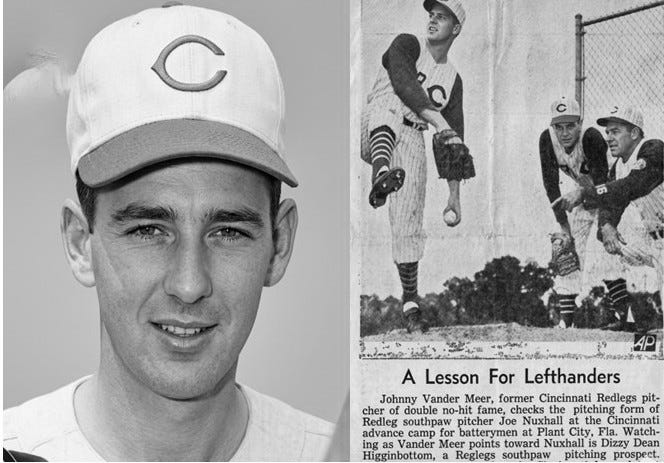
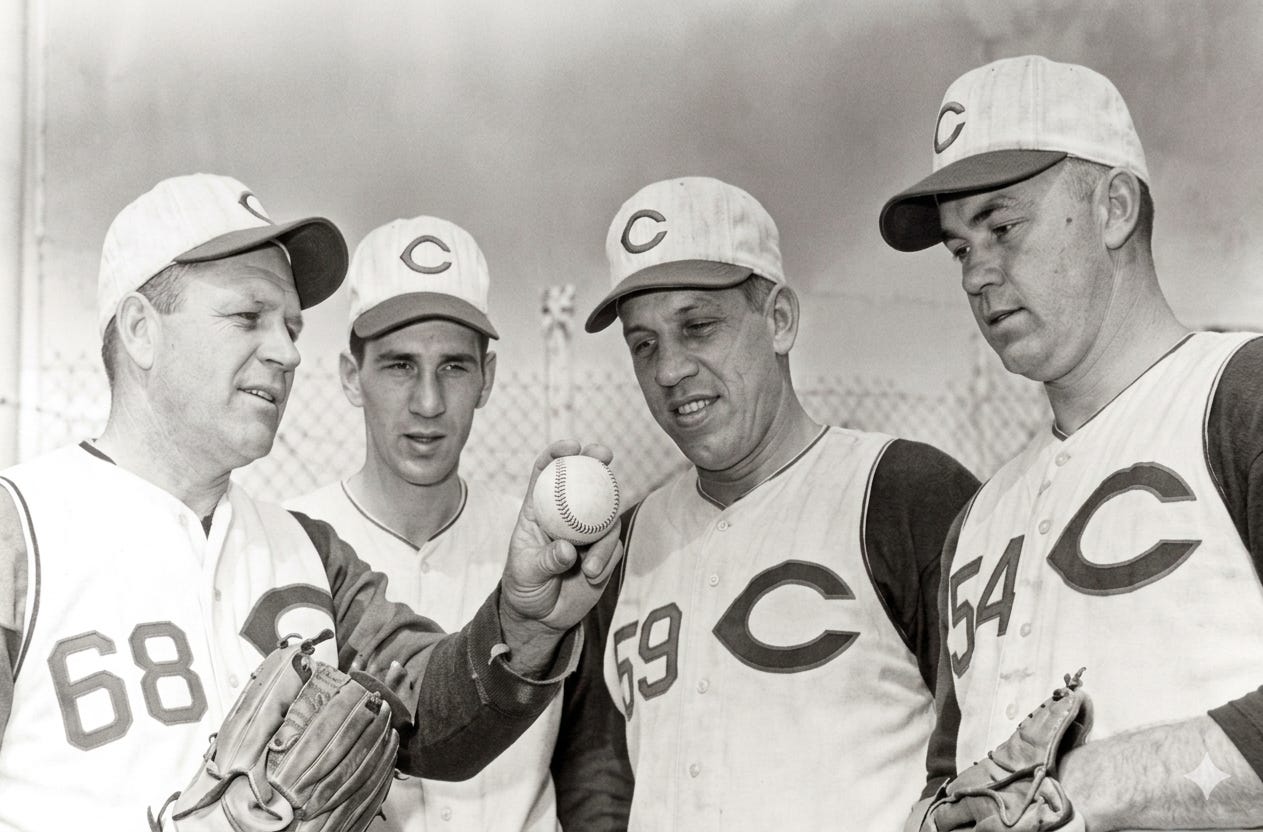
In February of 1958, Higginbottom was invited to report to Plant City, Florida, to get early work with the team’s top prospects. A widely distributed Associated Press photo released on February 17th, pictured Dizzy with special pitching coach, Johnny Vander Meer, and pitching prospects Joe Nuxhall and Jim Bailey. Less than a week later, Higginbottom and Bailey would be involved in an auto accident that could have ended Dizzy’s career.
On Saturday night, February 23rd, Dizzy was driving, and Jim Bailey was a passenger in a car that was struck by an approaching automobile that crossed the centerline and hit the players’ car broadside. Bailey suffered fractures to his non-pitching arm, and Higginbottom escaped with cuts and bruises. Reportedly deeply concerned about his teammate’s baseball future, a shaken Higginbottom refused to discuss the accident.
While Dizzy recovered physically from the accident, the rest of the spring did not go well. In mid-March, in an incident eerily similar to one that ended his namesake’s career, he was hit on the toe by a line drive and missed several days’ work. When he recovered, he continued to struggle with his control, and he was not the dominating pitcher he had been previously.
Higginbottom’s trip to spring training that had looked so promising turned out to be a mentally and physically difficult experience. Instead of leaving with new skills and confidence, he would never recover his place as a top prospect.
Originally projected as a starter at Class AA Nashville, Higginbottom spent most of 1958 with Class A Albuquerque, in the Western League. He had some good outings with the Dukes, but his ERA was up (4.17), and his control was still a concern.
In the spring of 1959, the Reds optimistically assigned Higginbottom to Class AA San Antonio of the tough Texas League. After a few lackluster outings with the Missions, he was demoted to the Lancaster Red Roses. Lancaster, Pennsylvania, was in the Eastern League, and the distance from Indiana and Arkansas was measured in more than miles. A discouraged Dizzy Dean Higginbottom returned home to Anderson, Indiana, in early June of 1959.
Higginbottom found himself once again a star in the semi-pro leagues of Central Indiana. He continued to be one of the region’s top pitchers for several years to come, eventually turning to coaching the local youth teams in Anderson. In the early 1970s, while coaching the American Legion team, Higginbottom coached an outstanding all-star shortstop aptly named Paul Dean Higginbottom. The young infielder was, of course, Dizzy’s son.
Dizzy worked for Cooper Planned Communities until his retirement, when he moved back to Northeast Arkansas. The outstanding minor league lefthander died in May of 2018.
Dizzy Dean Higginbottom had an attention-getting name, but he earned his reputation as one of the outstanding minor league pitchers of the mid-50s by his performance. He appeared in 140 minor league games and earned 35 victories on the mound.
In 2017, SABR baseball historian Bill Hickman created a list he called “Near Major Leaguers.” Among these players were the non-roster players invited to spring training with the major league team. These players wore the big-league uniform, trained with the team, and enjoyed the big-league spring atmosphere, but never played a major league game. Among those listed was Dizzy Higginbottom of the 1958 Cincinnati Reds.
________________________
Another “Arky” Comes Close…
A similar “come close” story from Only in Arkansas.
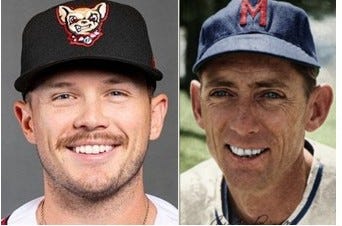
Only in Arkansas, January 1924
_________________________
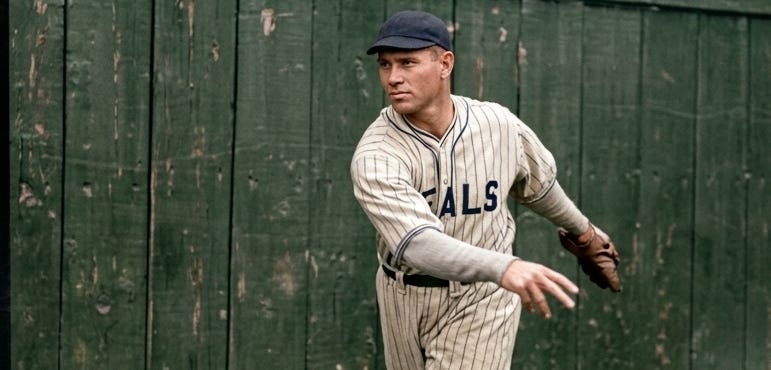
Did you miss the story of the Ohtani-like career of Saline County’s Jimmy Zinn?