
Backroads and Ballplayers #154
Stories of the famous and not-so-famous men and women from a time when baseball was “Arkansas’ Game.” Backroads and Ballplayers Weekly is always free and short enough to finish in one cup of coffee.

Curry and Van Horn Finish Strong, Town Team of the Month, and See You Thursday at the Pope County Library
_______________________
Current Subscribers: 324
If you do not want to miss these posts, you can subscribe or save the address of the Backroads and Ballplayers Facebook Page. Instructions below:
A Subscription sends these weekly posts to your mailbox. There is no charge for the subscription or the Backroads and Ballplayers Weekly.
If you don’t want to subscribe, you can find the weekly posts on Monday evenings at Backroads and Ballplayers on Facebook. SAVE THE LINK
________________________
My friend Dr. Tom DeBlack and I will be at the Pope County Library on Thursday talking about John Tucker. Dr. DeBlack literally wrote the book on Arkansas Tech history. A Century Forward: The Centennial History of Arkansas Tech University. (2016)
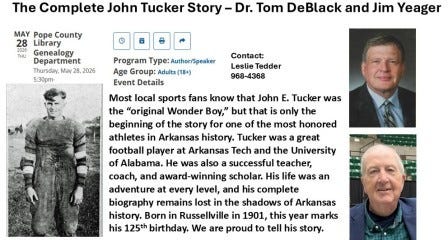
We have been digging into the life of one of Arkansas’ most revered athletes for about four years. It has been a pleasure. Tucker’s life story featured many little-known subplots filled with surprises, and we are excited to share his accomplishments and adventures. Please join us on Thursday at 5:30 p.m. at the Pope County Library in Russellville. The event will last about one hour.
Questions?
___________________________
Hogs and Trojans are packing up to travel.
After UA Little Rock’s Ohio Valley Tournament win on Sunday, I thought they would be headed to Mississippi, and I figured the Razorbacks had miraculously earned a chance to host in the first round of the regionals. That situation may have evaporated in Hoover with Arkansas run-rule loss to Georgia, or did the Hogs’ two losses to Stetson (203 in the RPI) make them a 17th seed rather than a 16? There are probably several of those mid-week home losses that can be blamed for an RPI rank (21) below Mississippi State (14). According to Whole Hog Sports, Kansas' 19th-ranked RPI was the lowest to earn a host spot. It is the second year in a row that no team will host with an RPI ranked below 19th.
“We have a pretty good team. We played a pretty tough schedule. That's 19 SEC wins now. [ ] seven out of 10 (SEC) series, we won. It's a pretty good team.” —Dave Van Horn
In our March survey, 50% of the respondents predicted the Hogs would have a “pretty good” season. Apparently, Backroads and Ballplayers Weekly readers knew what to expect almost four months ago.
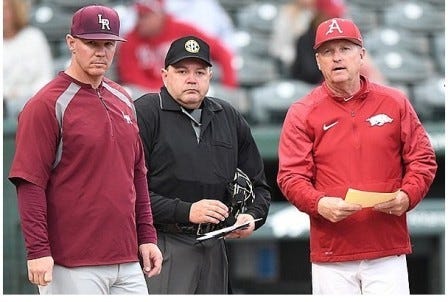
Both Chris Curry and Dave Van Horn proved they can pull a rabbit from the hat and should never be counted out. The Hogs are heading to Kansas to meet a familiar opponent, Missouri State, and Little Rock is going to Mississippi, as I expected. They play the home team, Southern Mississippi, in the first round at Hattiesburg.
There is probably some concern in Little Rock that a high-character guy like Curry, who has made two consecutive postseason runs, is on the national radar for schools looking for a coaching change. He is the real deal.
_______________________________
Town Team of the Month, May 2026
The Claybrook Tigers
Most of you have never been to Claybrook, Arkansas. I would also guess that those who have accidentally been down the dusty farm road in Crittenden County did not know when you passed through an ordinary bean field that was once the home of one of Arkansas’ most successful “Town Teams.”
Thousands of fans once made the excursion from the larger cities by train or came from local farming villages to see the Claybrook Tigers play. Their opponents came from cities like Little Rock and Memphis, and from as far away as Cuba.
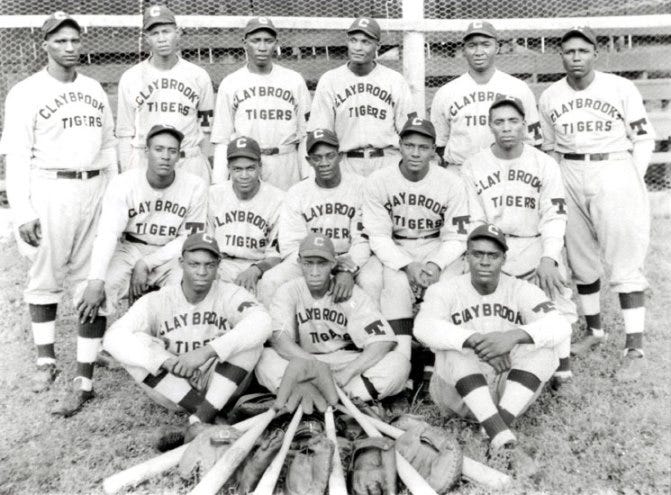
There is no historical marker on Simsboro Road, about 10 miles northeast of Hughes, Arkansas, although some of the most noteworthy minor league baseball games in our state’s history were played there. Today, only the legend of the Claybrook Tigers remains.
The community, once called Topaz, was renamed Claybrook after the African-American entrepreneur who transformed a cotton field into a thriving timber business, hiring dozens of locals and entertaining the society crowd from Memphis on weekends. In its heyday, the boomtown of Claybrook, Arkansas, featured a boarding house, a sawmill, a general store, a dance hall, and a championship-level town team.
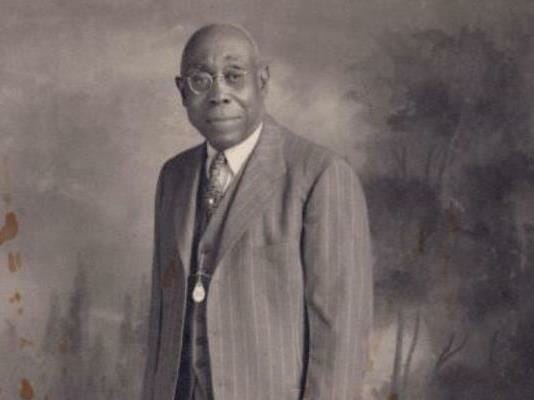
John C. Claybrook arrived in Crittenden County, Arkansas, about 1905. He was in his early 30s, and although he had little formal education, he was destined to become one of the most respected businessmen of his time. Shrewd and determined, Claybrook reportedly could not read or write, but he could do business calculations in his head faster than his associates could calculate the transaction.
Upon his arrival in the Delta, Claybrook saw other farmers clearing native timber to make room for cotton. Claybrook had an idea. In addition to his modest farming operation, he would contract for the removal of the virgin cypress, oak, and hickory and process it into lumber at his sawmill. His lumber business thrived, and by the early 1930s, his original two-acre farm had grown to more than 1,200 acres. John Claybrook had become one of the wealthiest and most respected Black businessmen in the region, but his affection for the hard work it took to reach that status was not easily passed on to his family.
Claybrook’s daughter, who left the farm to become a schoolteacher in Memphis, recalled that life on the plantation came with a demanding schedule. Weekends were often spent entertaining the Memphis and Little Rock society crowd that had arrived by train for a good time. Monday mornings began at sunrise at the sawmill or the cotton field and continued until darkness ended the workday. The routine was part of the philosophy the elder Claybrook lived by, but it was a difficult lifestyle for his children. The least satisfied member of his family was his teenage son.
John Claybrook Jr was born in 1916, but despite growing up in a somewhat privileged home, plantation life was not for him. Young John loved sports, and his father hoped that sponsoring a local baseball team might keep his son down on the farm. That team would become the Claybrook Tigers. While town teams were the norm in the South in those days, an obscure sawmill town with a professional team good enough to challenge the best baseball teams in the region was a historic exception.
An association that offered regulated professional baseball opportunities to men of color had been created in 1920 and became known as the Negro Leagues. The young men drawn to the newly created teams had big-league skills, but before the formation of the new organization, they were restricted to barnstorming against local town teams.
The Claybrook Tigers played in the Negro Leagues’ somewhat informal minor leagues. These leagues seldom played a standard regular-season schedule but often met in a postseason championship series.
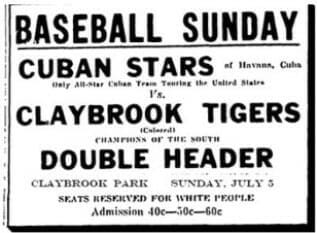
According to the Arkansas Baseball Encyclopedia, the Tigers began with a modest schedule in 1932, and as the quality of players John Claybrook recruited improved, the team challenged the best teams the Negro Leagues had to offer. Claybrook built an impressive ballpark for his team and began to recruit some of the top Black baseball players in the South. By 1935, he had put together a championship-level team.
He did not have to look far to find some of his top players. Switch-hitter Alfred “Greyhound” Saylor was from Blytheville, Arkansas, and ace pitcher Theolic, “Fireball” Smith was born in Wabbaseka. The Tigers’ first baseman, Bill “Wing” Ball, grew up in Little Rock. Ball had no lower right arm, but was an excellent defensive first baseman and a local favorite.
In September 1935, the Claybrook Tigers defeated the Memphis Red Sox four games to three in a playoff series to claim the 1935 Negro Southern League title. The Memphis Commercial Appeal gave the championship series about 50 words on page 11. The story, under the small headline, “Claybrook is Crowned,” noted that Theolic Smith struck out eight in the 5–2 win.
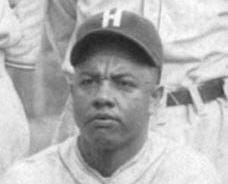
In 1936, John Claybrook Sr. decided to make an aggressive change in the Tigers based on the 1935 success. He brought in a big-name player-manager called “Double Duty” Radcliffe. Theodore Roosevelt Radcliffe earned his nickname by regularly pitching one game of a doubleheader and catching the next. As part of Radcliffe’s deal to come to Claybrook, he lived with the Claybrook family and received a large share of the gate receipts.
The team’s success and the extra expense of Double Duty’s paycheck led to more games in Memphis at the more spacious Russwood Park. In order to increase revenue, the Tigers played most of their big-name opponents in Memphis in 1936, with less than six games actually played in Claybrook.
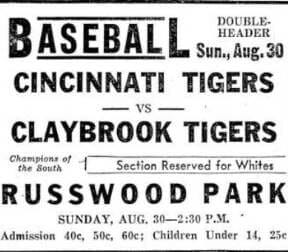
By the end of the 1936 campaign, Radcliffe and Claybrook were at odds over Double Duty’s share of the gate, and a disappointed father realized that his son was never going to be satisfied in the Arkansas Delta. There is no record that the Claybrook Tigers played after 1936. Radcliffe left for Cincinnati with most of the better players, and John Claybrook Jr. moved on to the city life he preferred. By the early 1940s, John C. Claybrook had sold his Arkansas operation and moved to his alternate home in Memphis. He passed away in 1951.
The 1935 Claybrook Tigers were champions of a league known as the Negro Southern League. Fifteen years before the Tigers’ title, the Little Rock Travelers won a pennant in a segregated minor league called the Southern Association. The 1920 Travs are the subject of dozens of feature stories, but the history of the Claybrook Tigers was generally forgotten until two Arkansas historians set about to honor the team’s accomplishments.
Caleb Hardwick’s work in the Arkansas Baseball Encyclopedia contains the most complete research available on the Negro League Era’s history in Arkansas. Among the teams, leagues, and ballparks included in the online publication is a look back at the Claybrook Tigers.
In 2001, David D. Dawson of the University of Arkansas produced a documentary on the Claybrook Tigers called Swingin’ Timber. Dawson drew from extensive research and the photo collection of Dr. John R. Haddock of the University of Memphis to create the definitive tribute to one of the most important teams in Arkansas baseball history. Watch Swingin’ Timber courtesy of Dave Dawson.
Claybrook photos courtesy of David Dawson, the John R. Haddock Collection, and the Arkansas Baseball Encyclopedia.
______________________