
Backroads and Ball Player #152
Stories of the famous and not-so-famous men and women from a time when baseball was “Arkansas’ Game.” Backroads and Ballplayers Weekly is always free and short enough to finish in one cup of coffee.

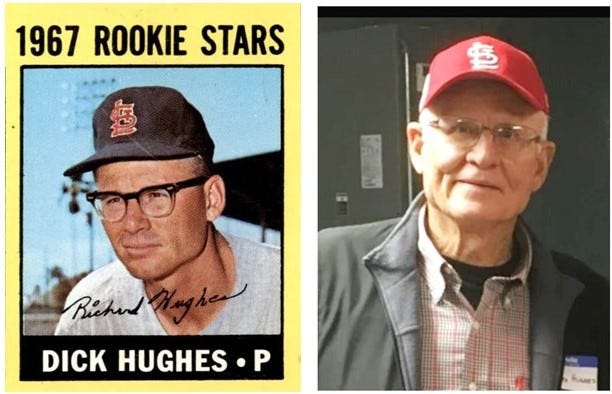
Richard Henry Hughes 1938 - 2026
His baseball heroics were outstanding, but Dick Hughes, the man, was exemplary.
More next week on the passing of one of Arkansas’ favorite sons.
__________________________________________
A Celebration in DII, and Lost Stories of Arkansas Brothers
Another Dog Pile in Russellville
Most Division II and Division III college baseball games are free. At Arkansas Tech, the games have the feel of the old “town team” days that seem to be my obsession. Good popcorn, familiar faces, and all the seats are behind home plate or wherever you put your lawn chair.
For the second year in a row, the last home game in Russellville concluded with a celebration unique to baseball.
The first game of the GAC postseason tournament finals ended with a walk-off in the bottom of the ninth inning, and the final game saw an 11-hit offensive show and a dog-pile on the infield. Dave Dawson’s Wonder Boys know how to compete, and I will miss these nights at Baswell Field. Susan will miss the popcorn.
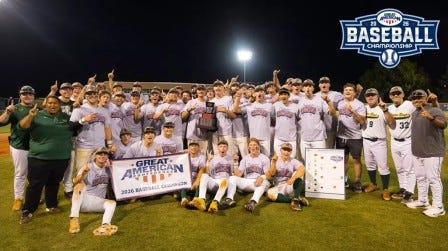
I assume that a similar atmosphere exists all around the GAC and SCAC. Every year at this time, I encourage those of you who love the game to find a “home team” in your area next spring. You may need a jacket until May, but you won’t have to know anything about RPI.
The ABCs of the RPI
As we head into the final weekend in DI, I thought this would be a good time to “explain” RPI. We will hear a lot about RPI over the next three weeks, so…a little insight into the mysterious formula that the NCAA claims to use in selection and ranking for postseason seeding.
So, get a cup of coffee.
25% - Winning percentage (adjusted for location). A home win .7, road win 1.3. Home losses are also weighted negatively. This past weekend, Arkansas earned .14 and lost .13!
50% - Combined winning percentage of all of the team’s opponents.
25% - Combined winning percentage of all of those opponents’ opponents. My buds Bob and Jim are accountants. They can calculate this in four or five days.
Although that looks simple and fair, it may be fair (every team knows the rules), but it is not simple. The big mathy thing is the Strength of Schedule “SOS,” and all teams know it is important. Get your legal notepad, calculator, and a sharp pencil.
SOS is the mathematical equation involving the combined winning percentage of all a team’s opponents and the combined winning percentage of all a team’s opponents’ opponents. The SOS analysis comprises 75% of the total RPI score.
Got it, probably not? If we understood it, we could not, in good conscience, complain about it.
Where is head-to-head, the big tie-breaker in all conference standings? Head-to-head only works when all teams play all other teams, but some conferences use it anyway. Personally, as a fan of the team ranked 26 in RPI, I just want to be confused by it so I can complain.
Monday, May 11, RPI:
Razorbacks - 26th
Red Wolves - 60th
Trojans - 98th
Bears - 149th
Golden Lions - 254th
Anyone interested in commenting on RPI?
_____________________________
Next Week - Dick Hughes tribute, SEC wrap-up, and What’s next for the Hogs, Trojans, Bears, and Red Wolves?
A Lost Story Quiz - Arkansas-born Brothers
Who were the first Arkansas-born brothers to reach the major leagues? (Easy)
Who were the first pair of Arkansas-born brothers to appear in the same game for the same team? (Too easy)
Who were the first pair of Arkansas-born brothers to oppose each other in the same game? ( Tricky?)
Who were the first pair of African American brothers to reach the American or National League? ( No Googling)
Who were the last pair of Arkansas-born brothers to reach the American or National League? (Hard?)
CAUTION - Correct answers below:
Message me if you got all these correctly without Google, AI, or Caleb Hardwick (Arkansas Baseball Encyclopedia)
________________________________
If you do not want to miss these posts, you can subscribe or save the address of the Backroads and Ballplayers Facebook Page. Instructions below:
A Subscription sends these weekly posts to your mailbox. There is no charge for the subscription or the Backroads and Ballplayers Weekly.
If you don’t want to subscribe, you can find the weekly posts on Monday evenings at Backroads and Ballplayers on Facebook. SAVE THE LINK
If you receive this post by email on a desktop, you may prefer the desktop version.
_________________________________
Arkansas Brothers Lost Stories Quiz
Who were the first Arkansas-born brothers to reach the major leagues?
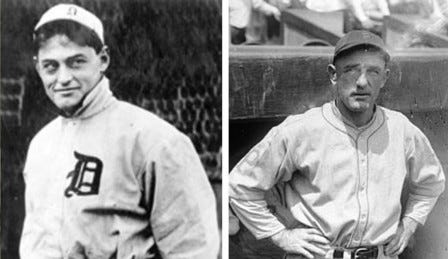
That would be the Schmidts…Charles “Boss” Schmidt and Walter Schmidt. The Schmidts were born in London, Arkansas, Boss in 1880, and Walter in 1887. The brothers grew up in Coal Hill, and both were coal miners in their youth. Boss made his professional debut in 1901, playing center field for the Travelers in one game. He first appeared in a major league game on April 30, 1906. The elder Schmidt played his final game on October 8, 1911. After playing nine years of minor league baseball, Walter played his first big league game on April 13, 1916, and his last game in 1927 at age 37.
Who were the first pair of Arkansas-born brothers to appear in the same game for the same team?
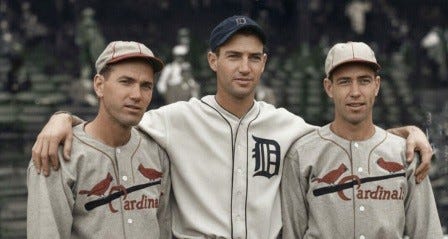
I assume you got this one. The Deans both pitched for the Cards in the Gas House Gang’s second game in 1934. After winning seven to one on Opening Day, Diz started the Cardinals’ fifth game on April 22. By the third inning, he had given up eight runs, and Dizzy Dean was relieved by Paul Dean in the younger brother’s first major league game. The soon-to-be legendary brothers would win 45 games in 1934 and all four St. Louis victories in the World Series.
1934 World Series, Only in Arkansas
Who were the first pair of Arkansas-born brothers to oppose each other in the same game?
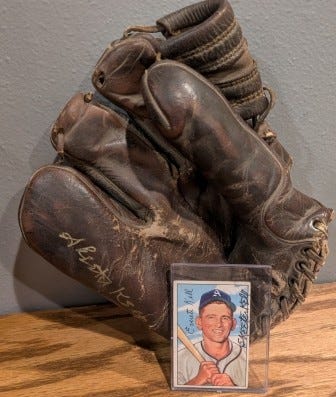
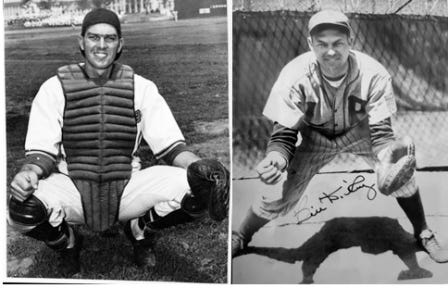
Yes, Bill Dickey and George Dickey played in the same game on September 21, 1935, BUT Bill Dickey was born in Bastrop, Louisiana.
Everett “Skeeter” Kell was this month’s mystery photo. Ronnie Clay made the first correct guess about three hours after that post went live.
Skeeter Kell’s 1952 campaign with the Philadelphia Athletics was his only season in the big leagues. On April 4, 1952, George Kell started the game at third base for the Tigers, and Skeeter Kell opened the game at second base for the Philadelphia Athletics. George Kell went one for two in the game on April 4, and Skeeter had two singles in five at-bats. The game marked the first time two Arkansas brothers had opposed each other in a major league game. Both ended the day batting .304.
Tribute below by my friend, the late Dr. Bob Reising:
Skeeter Kell eventually settled in Conway, Arkansas, where he became a fixture at the local country club and the First United Methodist Church. Even in retirement, his competitive spirit remained; he often joked about the “misfortune” of golfing with his wife of 67 years, who frequently carded lower scores than he did. When Kell passed away in 2015, he was remembered not just as a ballplayer but as an exceptional family man and a fine friend. Unlike “Moonlight” Graham, Skeeter Kell didn’t just get a glimpse of the glory—he lived it for an entire season and then built a respected, productive life that lasted long after the final out was recorded.
Dr. Bob Reising, February 20, 2017, 501 Life
Who were the first pair of African American brothers to reach the major leagues?
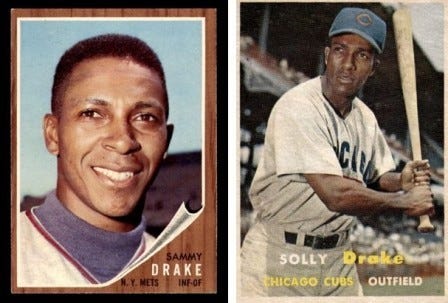
Sammy and Solly Drake were not only the first African American major-league brothers born in Arkansas, they were also the first African American brothers to reach the big leagues, period.
Soloman Louis Drake and Samuel Harrison Drake were born in Little Rock, Arkansas. They grew up about a mile from Brooks Robinson and his pals at Lamar Porter Field. In a sad commentary about those days…I asked a former teammate of Brooks if he had any recollection of the Drakes. His response: “I had never heard of them until they played in the major leagues.”
Solly Drake played in 141 major league games from 1956 to 1959. Sammy Drake was a switch-hitting infielder who played 53 games with the Chicago Cubs and New York Mets between 1960 and 1962.
Who were the last pair of Arkansas-born brothers to reach the major leagues?
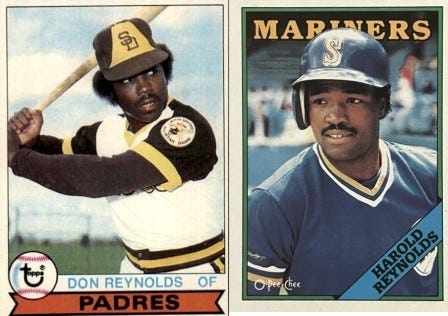
If you guessed the Reynolds brothers above, you are young, clever, and wrong. Harold, the current TV guy, was born in Oregon…Don in Arkadelphia. The last brothers were also the Drakes.
________________________________
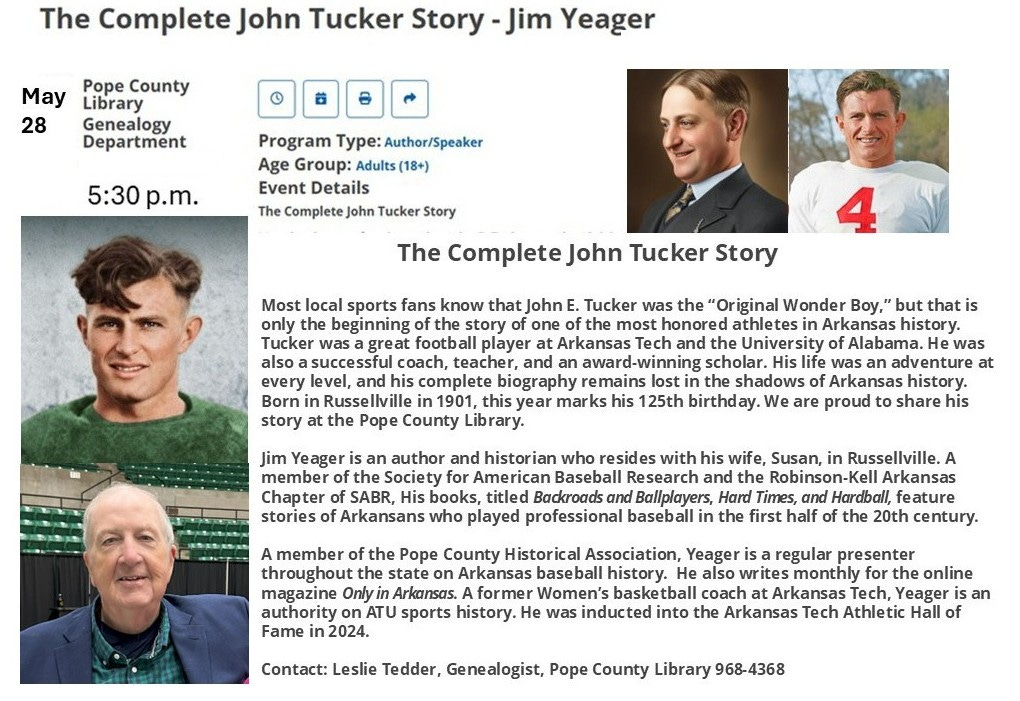
I would love to see you on May 28.
Also, if we include the major negro leagues, I believe the answer to the 2nd question becomes Willie and Codie Spearman in 1926 and the answer to the 3rd question becomes Willie and Charles Spearman in the 1920s (I'm not certain of the exact date). I suppose the answer to the 4th question technically would also be Willie and Charles Spearman as well.
Let the record show that Caleb Hardwick got 4 out of 5 right, and AI also got 4 out of 5 right.